
In my previous articles, I’ve shared insights into how autism influences my communication and marketing career. But there’s another side to it – one that isn’t talked about enough… Autistic burnout.
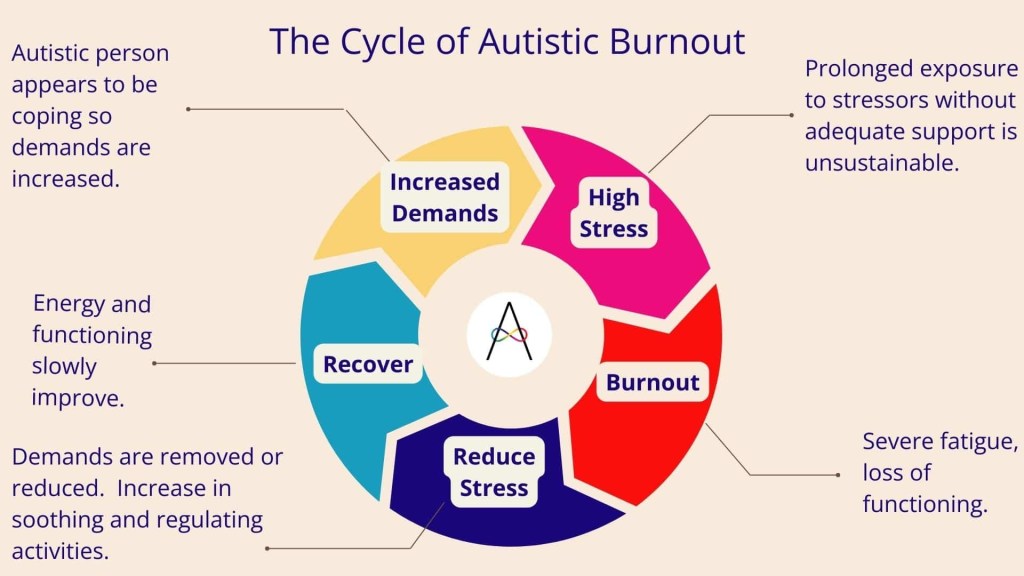
Burnout is something many professionals experience, but for autistic people, it’s different. It’s not just about being tired or overworked. It’s a full-system shutdown – a state of exhaustion that goes beyond physical fatigue, affecting emotions, cognition, and even the ability to function in daily life. And yet, because it isn’t widely understood, it often goes unnoticed, especially in high-pressure work environments.
It’s not just about being tired or overworked. It’s a full-system shutdown
As someone who thrives in structured, high-output roles, I’ve had to learn how to recognise the signs of burnout, the impact of sustained pressure, and the importance of work-life balance – even when my instinct is to push through.
What Autistic Burnout Looks Like
For me, autistic burnout isn’t just about stress – it’s about sensory overload, mental exhaustion, and emotional shutdown. When I hit that point, my ability to process information slows, my communication becomes harder, and even simple decisions feel overwhelming.
I struggle more with changes to plans, unexpected disruptions, or situations that demand rapid social interaction. The mental clarity I usually rely on in my marketing role starts to slip, and tasks that normally feel second nature suddenly feel impossible. It’s frustrating because I know I’m capable, but my brain and body just won’t cooperate.
At its worst, autistic burnout doesn’t just stay at work – it follows me home. I become too exhausted to engage with family, hobbies, or even basic self-care. And because burnout isn’t an instant thing – it builds over time. I often don’t realise how bad it’s getting until I’m already running on empty.
Signs to Watch Out For
Over time, I’ve learned to spot early warning signs before full burnout kicks in. These include:
- Struggling to switch off – Work taking up all my mental space, even outside of work hours.
- Heightened sensitivity – Feeling more overwhelmed by noise, changes, or social interactions than usual.
- Increased rigidity – Becoming more resistant to last-minute changes or disruptions.
- Decision fatigue – Even small choices feeling exhausting or frustrating.
- Loss of motivation – Tasks I usually enjoy start feeling like a chore.
Recognising these signs early is crucial because once I reach full burnout, recovery takes much longer. That’s why I now take proactive steps to manage my workload before it reaches that point.
Managing Pressure and Avoiding Burnout
I work in a fast-paced, constantly evolving industry, so avoiding pressure entirely isn’t an option. But what I can do is manage it in ways that work for me.
1. Prioritising Structure
Having a structured approach to my workload helps reduce unpredictability. I plan my tasks in a way that keeps things manageable and predictable, so I don’t feel overloaded.
2. Setting Boundaries
One of the hardest but most important things I’ve learned is that downtime isn’t a luxury – it’s essential. That means setting clear work-life boundaries, stepping away from my desk when needed, and ensuring I have time to recharge.
3. Embracing Adaptation (on My Terms)
I naturally prefer consistency, but in marketing, change is constant. I’ve trained myself to adapt without feeling completely thrown off, by breaking down changes into clear, logical steps that feel less overwhelming.
4. Knowing When to Step Back
Pushing through burnout doesn’t work. When I recognise the signs, I step back, delegate where needed, and allow myself time to reset. This isn’t a weakness – it’s a strategy that keeps me performing at my best.
Pushing through burnout doesn’t work.
The Importance of Work-Life Balance
Burnout isn’t just about work – it’s about not having enough recovery time to recharge from work. And for autistic professionals, that recovery is even more critical.
For me, having time to focus on personal interests, spend time with family, and just unwind without sensory overload is what keeps me functioning. Without that balance, the pressure builds up too fast, and burnout becomes inevitable.
This is something many companies need to recognise about neurodiverse employees. Productivity isn’t about who can work the longest hours – it’s about who can work effectively, sustainably, and in a way that supports long-term success.
Looking Ahead: Exciting Projects to Dive Into
While managing workload and pressure is essential, having projects to get excited about is just as important. I thrive when I have something meaningful to focus on, and right now, there’s a lot to look forward to:
Enterprise Summit 2025: Leading from Behind the Scenes
While the Enterprise Summit 2025 is a major event in the IT channel, my role isn’t just about being part of it – it’s about running it. As the lead project manager, I’m overseeing everything from branding and content strategy to budget allocation and logistics.
This means:
- Managing budgets and vendor sponsorships to ensure financial efficiency and maximum ROI.
- Overseeing event branding and marketing strategy to maintain consistency and impact.
- Coordinating cross-functional teams, from studio and digital to sales and commercial, ensuring seamless execution.
- Delegating tasks effectively, ensuring every moving part of the event is handled by the right people.
- Problem-solving in real time, adapting to challenges while keeping the event on track.
Running an event of this scale requires a balance of structure, adaptability, and strong leadership – all of which play to my strengths. It’s a high-pressure, high-stakes environment, but that’s what makes it so rewarding and I thank Jake Breach for the opportunity to run something like this and Alice Himfen for her support and being my 2nd pair of eyes when I feel like I am going mad!
Completing My Upgrade Management Course
A significant milestone in my professional growth has been completing my Upgrade Management Course – a programme designed to refine leadership, decision-making, and strategic management skills.
This course has deepened my understanding of:
- Building high-performance teams
- Managing change
- Making data-driven decisions
I’ve developed expertise in:
- Personal Effectiveness – Enhancing self-awareness, managing workloads efficiently, and driving inclusivity in the workplace.
- Leadership & Team Development – Coaching teams to improve performance.
- Project & Resource Management – Overseeing the full project lifecycle and aligning teams with goals.
- Strategic Decision-Making – Driving business outcomes while managing risk.
- Change & Conflict Management – Navigating transitions and delivering feedback constructively.
Beyond the technical aspects, this course has reinforced the importance of structured thinking, emotional intelligence, and adaptability – all of which are essential in leadership. As I step into my new role, these skills will be invaluable in shaping strategies, guiding my team, and ensuring our marketing efforts continue to evolve in line with business goals.
For this I thank Chris Sutcliff for all his help & guidance on this course.
A New Chapter: Brand Strategy & Performance Manager
My next career step as Brand Strategy & Performance Manager is a shift into a more strategic leadership role – one that allows me to combine data-driven insights, brand strategy, and team leadership to elevate our marketing approach.
This role involves:
- Building a new Performance & Analytics team, focused on tracking marketing impact, campaign performance, and driving strategic improvements.
- Overseeing brand strategy with the studio team, ensuring creative output aligns with business objectives.
- Aligning data with creative strategy, blending analytics with storytelling.
- Managing cross-team collaboration, ensuring marketing is measurable and impactful.
It’s an exciting opportunity to bring together my strengths in structured thinking, problem-solving, and leadership, shaping how Exertis Enterprise measures and enhances its brand presence. Again, I thank Jake Breach for this opportunity.
Final Thoughts
Autistic burnout is real, and it’s something that more workplaces need to understand. But with the right strategies, it’s possible to manage pressure, avoid shutdown, and continue performing at a high level without sacrificing wellbeing.
For autistic professionals, my advice is: learn your limits, protect your energy, and never see rest as failure. And for companies, remember – supporting neurodiverse employees isn’t about making exceptions, it’s about unlocking their full potential.
Let’s build workplaces where everyone, neurodiverse or not, can succeed without burning out.
 Autism: Through My Eyes