I’ve spoken a lot in my articles about burnout, masking, perfectionism and the pressure I put on myself – but one thing I haven’t gone into much depth about is my experience with anxiety and depression.
I was diagnosed with anxiety and depression years before I was diagnosed as autistic. And for a long time, I didn’t question it. I was overwhelmed, easily stressed, mentally exhausted, and often felt like I wasn’t good enough. I put it down to burnout. Work. Life. Pressure. I didn’t think anything more of it.
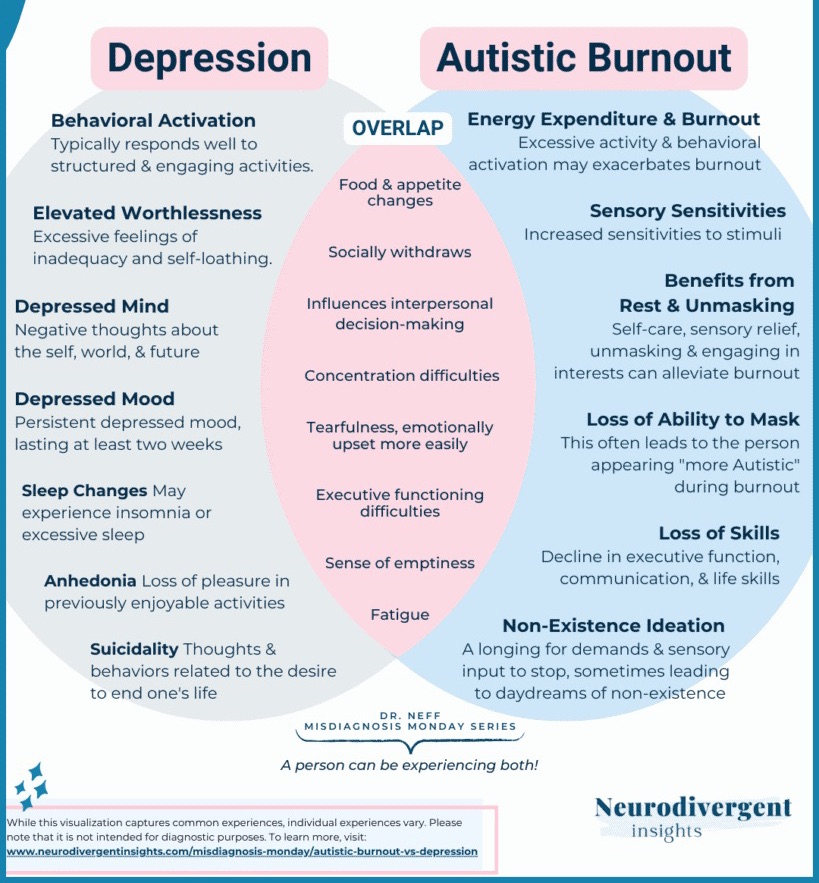
But now, with my autism diagnosis in hand, I find myself wondering: How much of what I was feeling was actually anxiety and depression – and how much of it was undiagnosed autism? Or are all three just so deeply entangled that they’re impossible to untangle?
The Confusing Overlap
When I was diagnosed with anxiety and depression, the signs were fairly textbook: fatigue, emotional exhaustion, racing thoughts, mood dips, loss of motivation, and an inability to switch off. That diagnosis made sense. But even with medication, the symptoms never really went away – they just got dulled.
“The average delay between the first signs of autism and formal diagnosis in adults is around 10 years.”
Lai & Baron‑Cohen, 2015 – The Lancet Psychiatry
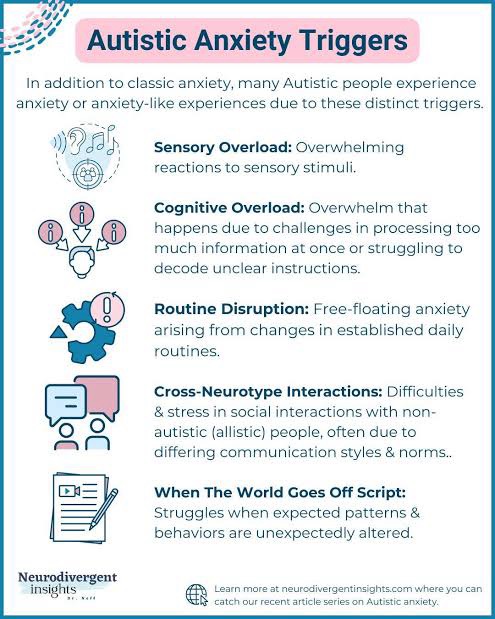
After my autism diagnosis, I started reflecting on how many of those symptoms overlapped. The sensory overload, executive dysfunction, the burnout cycles, and the crippling perfectionism weren’t just signs of anxiety – they were also deeply autistic traits.
It made me question everything: Was this all anxiety and depression? Or had I been misunderstanding the signs of autism all along?
“Among autistic adults, approximately 27% currently experience an anxiety disorder and 23% experience depression; lifetime prevalence rates rise to 42% and 37% respectively.”
Hollocks, Lerh, Magiati, Meiser‑Stedman & Brugha, 2019 – Psychological Medicine
So yes – I now know I’m not alone. There’s data to back it up. But that doesn’t make the experience any less confusing.
I Don’t Always Know What I’m Feeling
This is the hardest part to explain. I don’t always know what’s wrong. I don’t know if what I’m feeling is depression, anxiety, autistic shutdown, burnout – or all of them.
Sometimes I just feel numb, and other times I’m overwhelmed and panicky about the tiniest thing. It builds quietly and then explodes without warning.
“Emotion regulation difficulties are significantly more common in autistic individuals and contribute to higher anxiety and depression levels.”
Mazefsky, Day, Minshew & Siegel, 2013 – Journal of Autism and Developmental Disorders
And once I hit that point? I don’t have the energy to mask it anymore. I snap. I zone out. I withdraw. I used to be good at hiding it. These days, not so much.
Medication, Misdiagnosis, and Numbness
Finding the right medication has been difficult. One dulled my anxiety but made the depression worse. Another helped my mood but made me feel wired and unable to relax. Now I’ve reached a balance, but it’s a blunt balance – it comes with feeling numb. I no longer have the extremes, but I also no longer feel entirely like me.
“Over 79% of autistic adults meet criteria for at least one lifetime psychiatric disorder, most commonly anxiety or depression.”
Lever & Geurts, 2016 – Journal of Autism and Developmental Disorders
Looking back, I can’t help but feel like the system missed something. Would I have been diagnosed with anxiety and depression if autism had been picked up earlier? Did I really have three conditions, or were they all symptoms of one thing that nobody understood at the time?
Pressure, Perfectionism and Burnout
I’ve written before about my perfectionism – how I want everything to be done to my standard, how I struggle to delegate, how I burn out because I never stop. That all feeds into my anxiety.
Change of plans, unexpected obstacles, not being in control – they all leave me spiralling. Even if I don’t show it straight away, it’s there, building up under the surface.
But it’s the depression that sneaks up on me in quieter moments. It’s the feeling that I’m not good enough at home. That I’m falling short. That no matter how much I do, it’ll never be enough.
And when work’s been overwhelming, and Mason’s running around before bed, and my senses are shot to pieces… I just shut down.
The Research
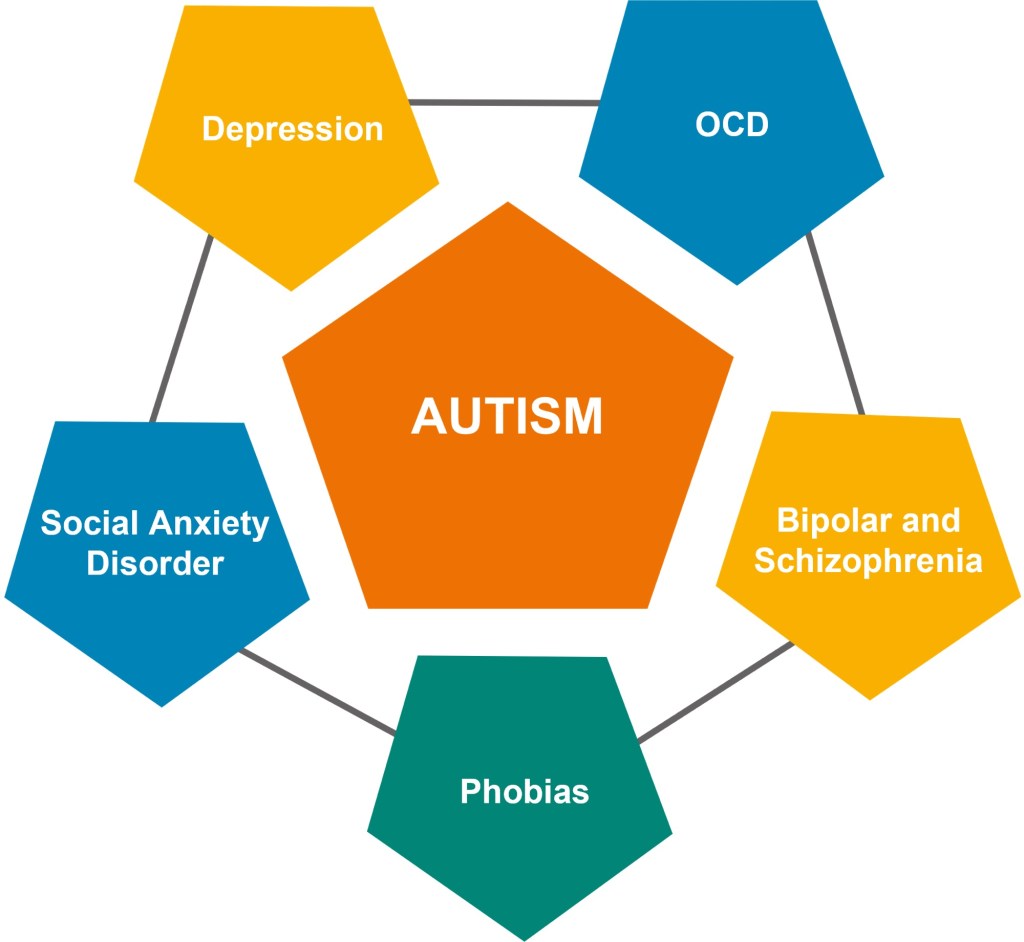
This overlap between autism, anxiety, and depression isn’t just personal – it’s well documented in the data:
“Autistic adults who frequently mask or camouflage their traits report higher levels of anxiety and depression.” – Cage, Troxell‑Whitman, 2019 – Autism Journal
“Antidepressant and antipsychotic use is significantly higher among autistic adults compared to non‑autistic controls.” – Pilling et al., 2022 – BJPsych Open
“Emotion dysregulation mediates the relationship between cognitive inflexibility and symptoms of anxiety and depression in autistic individuals. – Conner et al., 2024 – Autism Research
“Autistic people are at markedly increased risk of mental health problems, particularly anxiety and depression, across their lifespan.” – Hudson et al., 2019 – British Journal of Psychiatry
For many – like me – autism is missed altogether, or diagnosed late, and by the time it is, mental health challenges are already deeply embedded.
We’re not broken. We’ve just been misunderstood for a very long time.
I still don’t have the answers. I still don’t know which feelings are autism, which are anxiety, and which are depression. But I do know that the more I understand about my autism, the more I start to understand the why behind what I feel.
Because the more we talk about this overlap – and the more research backs it up – the more people might stop falling through the cracks.
I’m learning to give myself grace for what I feel – even when I can’t name it. Because that’s the reality of life with autism, anxiety, and depression – through my eyes.

 Autism: Through My Eyes